Sleeper · Issue 109 · 2023
Sleeper 109: Bab Al Shams Reviewed
In short
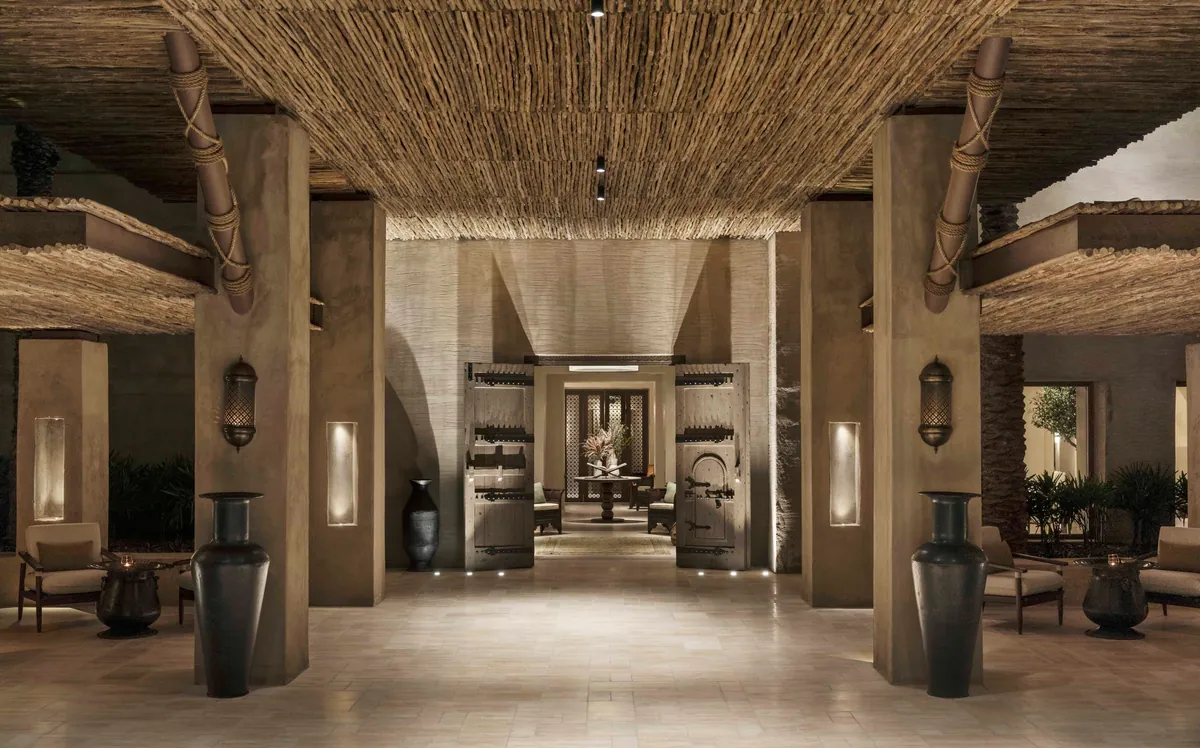
Sleeper’s review of the reopened Bab Al Shams is the single most factual published account of the project. It records the numbers nothing on lw.co does — a resort area of 56,000 m², a first opening in 2004, nine months closed for the interior transformation, and a 2023 reopening as the first property in Kerzner International’s Rare Finds collection — and it gets Pooja Shah-Mulani to explain the lost-princess narrative in her own words rather than as a line in a press release.
The projects this piece is about
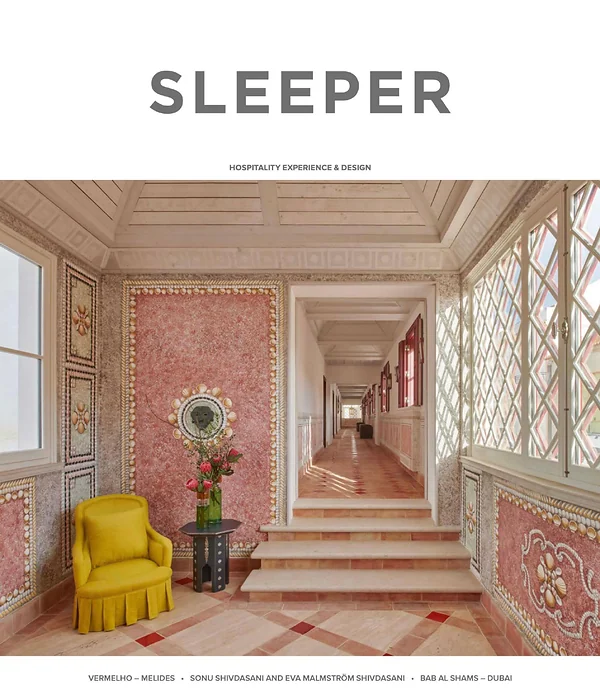
2023 · 9 pages
The work in the piece
Bab Al Shams
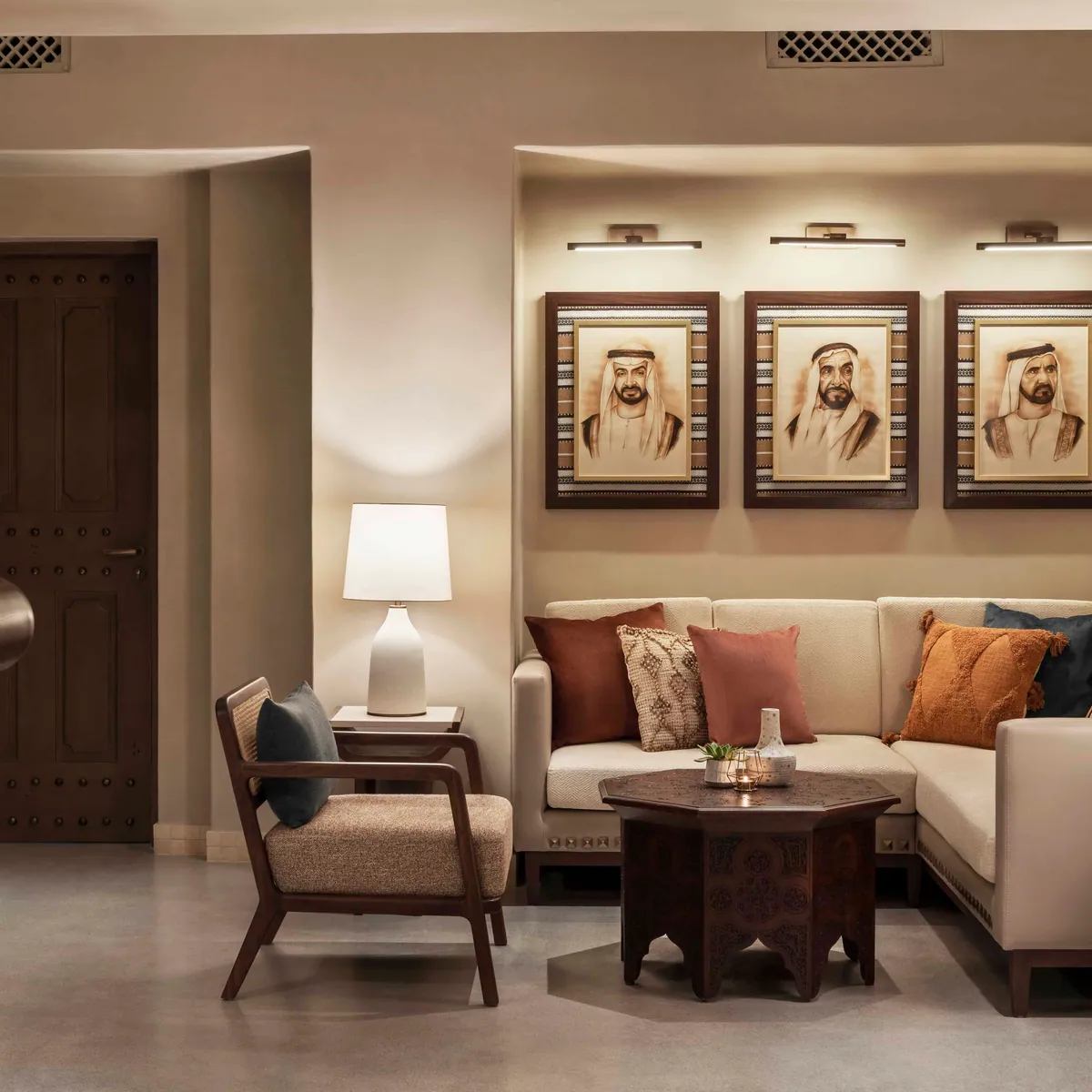
Why a lost princess?
Because the property already had a history, and a narrative was the way to return it. Shah-Mulani’s account in the review is the clearest statement of the method: personify the building, give it a story, and let the story decide what stays and what is added.
In the UAE, there are few and far between properties that have as much history as this. So, we wanted to personify Bab Al Shams by giving the property a story that would return it to its former glory. With the brief revolving around Arabian glamour, it made sense to introduce the narrative of a lost princess that had previously discovered the palace on her travels. We picked eclectic elements that relate back to her travels, unifying them as a central part of the redesign.
Pooja Shah-Mulani, quoted in Sleeper issue 109
How does a narrative become a detail?
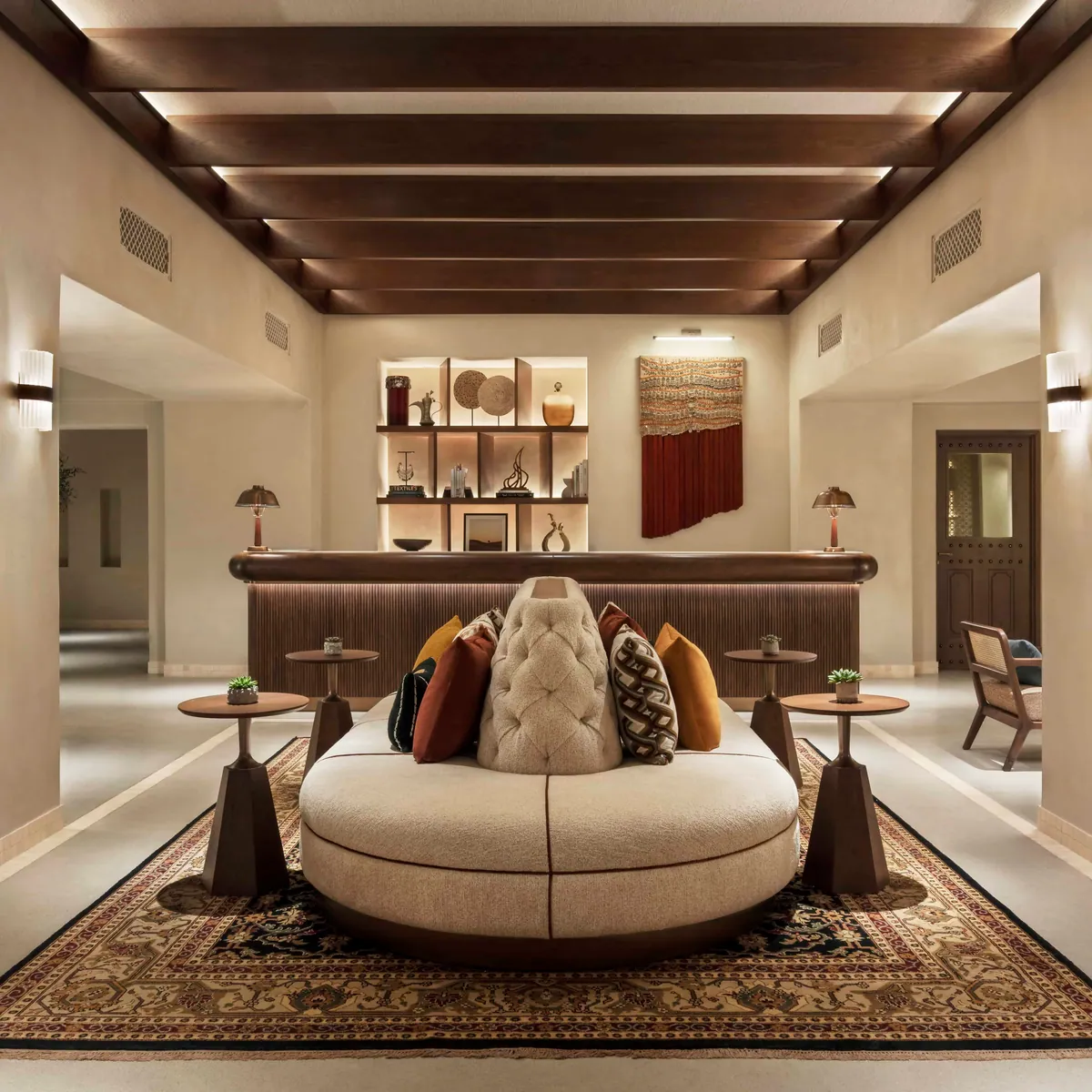
Through two repeating motifs — the traveller’s chest and the princess’s jewellery — carried from public rooms into private ones. The lobby lounge’s unfolding back bar reads as a grand travel trunk, with backlit compartments for botanical spirits, herb drawers and hand-cut crystal. In the guestrooms the minibars are rendered as luxurious leather luggage, complete with stitched handles and stud detailing.
The jewellery does the same work. Some original resort pieces were kept and reframed to read contemporary; the first artwork a guest meets in the lobby is a textile piece by the Iranian artist Mahsa Baraghani, drawn from the Bedouin jewellery and headdresses worn by Emirati women. In the rooms a backlit etched-mirror artwork shows the princess’s necklaces, layered with glimpses of her veil against a sand-filled landscape. Mashrabiya screens hide seating niches; an entrance loveseat sways.
We chose vibrant shades inspired by jewel tones to provide a reference to Arabian glamour, while artisanal patterns and tactile textures for the furniture and fixtures are an eclectic mix.
Pooja Shah-Mulani, quoted in Sleeper issue 109
What was already there?
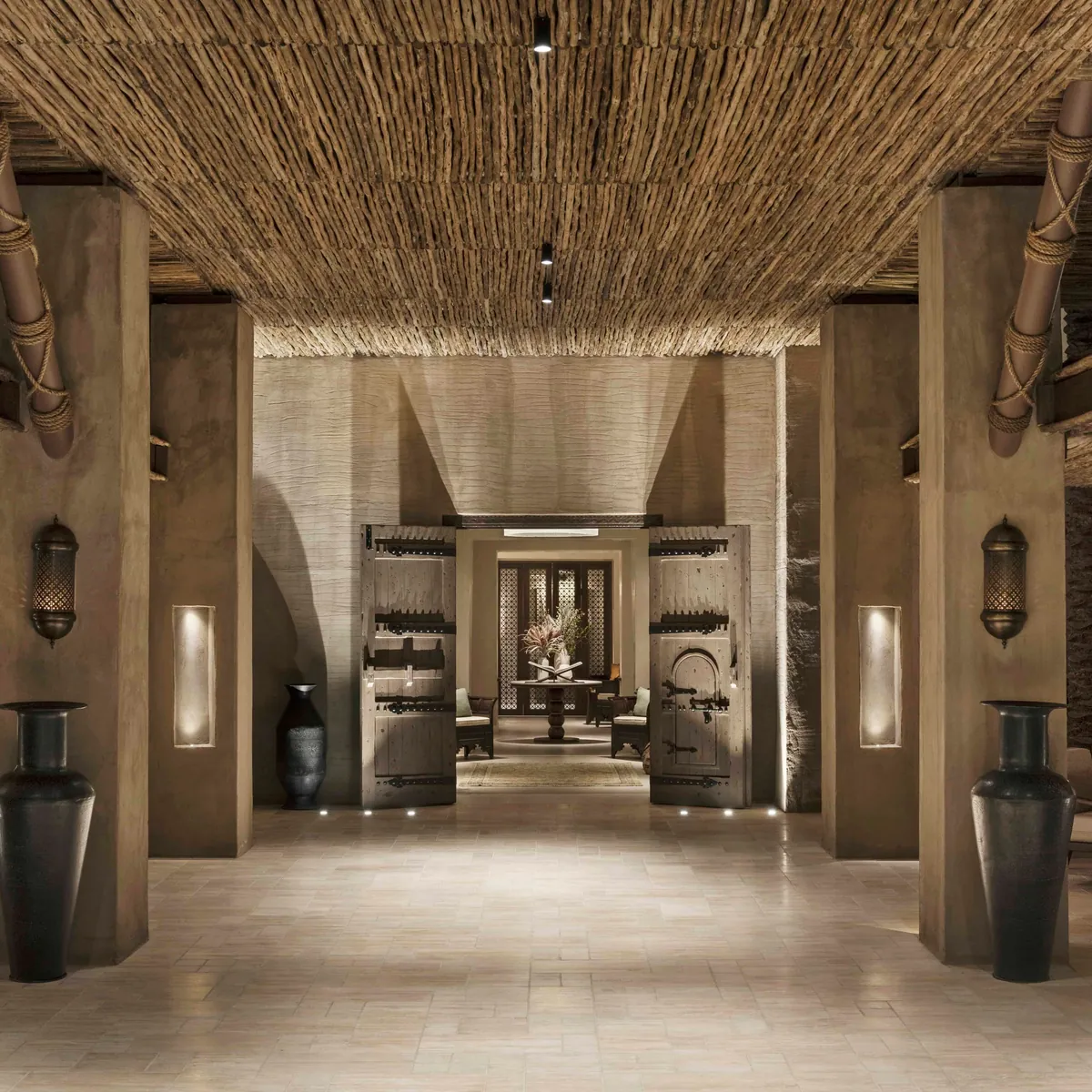
Most of it. Sleeper describes clustered adobe blocks — some terraced, others punctuated by arches — opening through narrow pathways onto courtyards of palm and ghaf trees and reflective water pools. That fabric is the reason the resort became a Dubai institution, and the transformation was interior rather than architectural.
What this piece establishes
The printed article
The page above is a summary with attributed extracts, not a reproduction: the copyright in this article belongs to Sleeper. The scanned pages are served from this site so the printed object stays available to anyone who wants it.
Download PDF (9 pages, 2.6 MB)More from the press archive
Also in Print
IFDM Wonder
Winter 2025
IFDM Wonder: Nature as an Operational Imperative
Read
Sleeper
November 2024
25 Years of LW Design — the Sleeper Interview
Read
CEO Middle East · Legacy Edition
July 2023
CEO Middle East Cover Story: A Legacy of Vision
Read
Hospitality Interiors · Issue 106
March–April 2023