Hotels & Resorts · Interior Design · Architecture
Waldorf Astoria
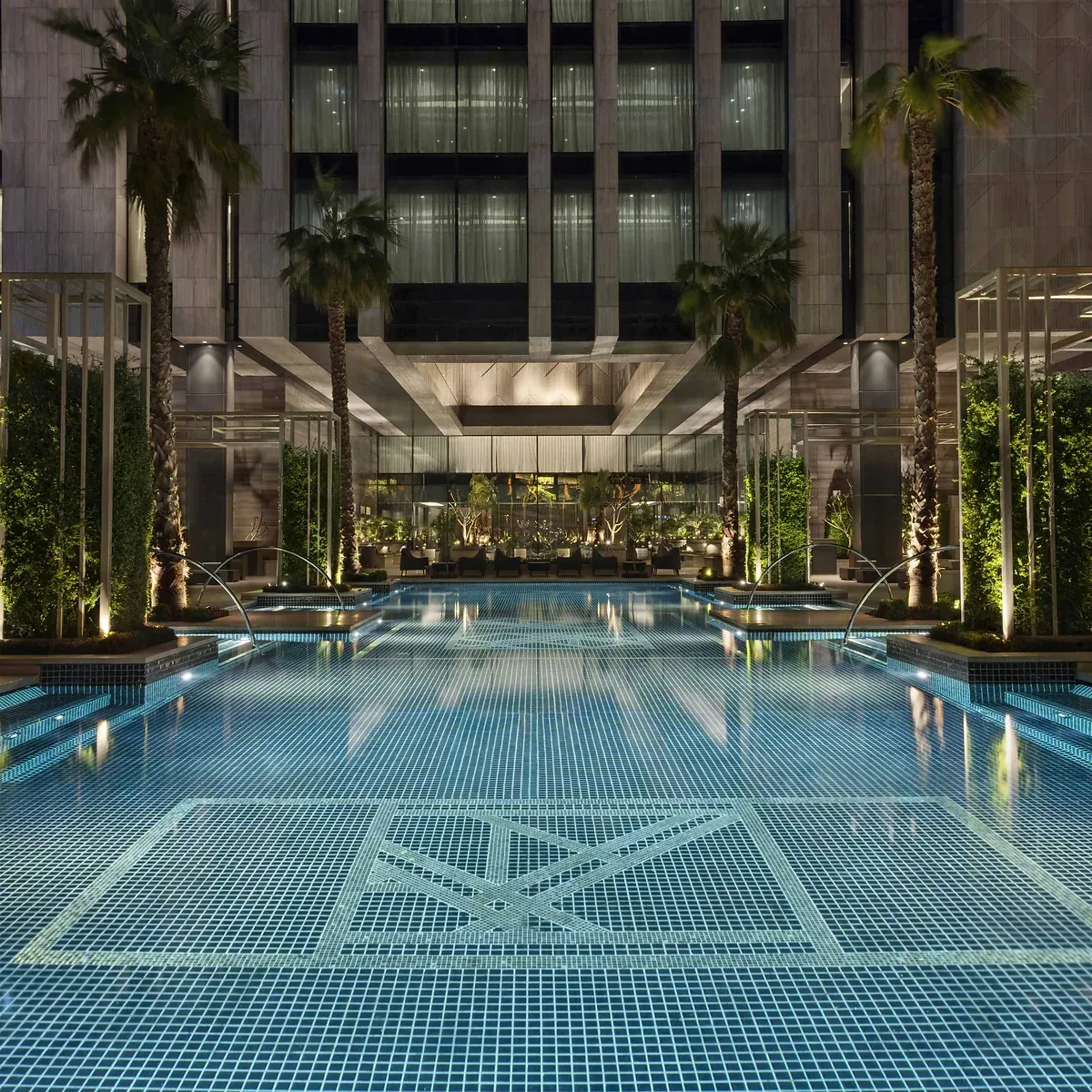
Waldorf Astoria Kuwait is a 200-room five-star hotel in the Avenues mall in Kuwait, designed by LW Design Group across architecture, engineering and interiors. Its 50,498 m² draw on the brand’s New York history and on Failaka Island and the legend of Icarus, gathered around a lobby clock by Smith of Derby.
What was the brief?
LW Design was tasked to create an upscale, luxury five-star hotel in the prestigious Avenues mall in Kuwait, a premium experience with over 1,000 stores, an amusement park, a cinema, cafés, fine dining and luxury shopping. The hotel has the flexibility to cater for business travellers, tourists and large family groups.
What is the design concept?
Waldorf Astoria Kuwait has an understated yet elegant palette to ensure that the hotel is stylish, modern and chic, with particular attention to the detail desired by the status-conscious traveller the brand attracts. Guests step into a special place where stories begin and unforgettable memories are made.
The hotel draws on the history of the Waldorf Astoria New York, which has welcomed royalty, politicians, businessmen and starlets for almost 130 years. The interiors reflect that sense of timeless luxury with the brand’s signature elements, such as Peacock Alley, the lobby clock and the library. LW Design also took inspiration from the ancient Failaka Island close to the city, home to the legend of Icarus, who represents the human yearning for escapism. The interiors reflect this history and the more traditional elements of Middle Eastern history in the Waldorf Astoria way.
Why is the lobby clock so important?
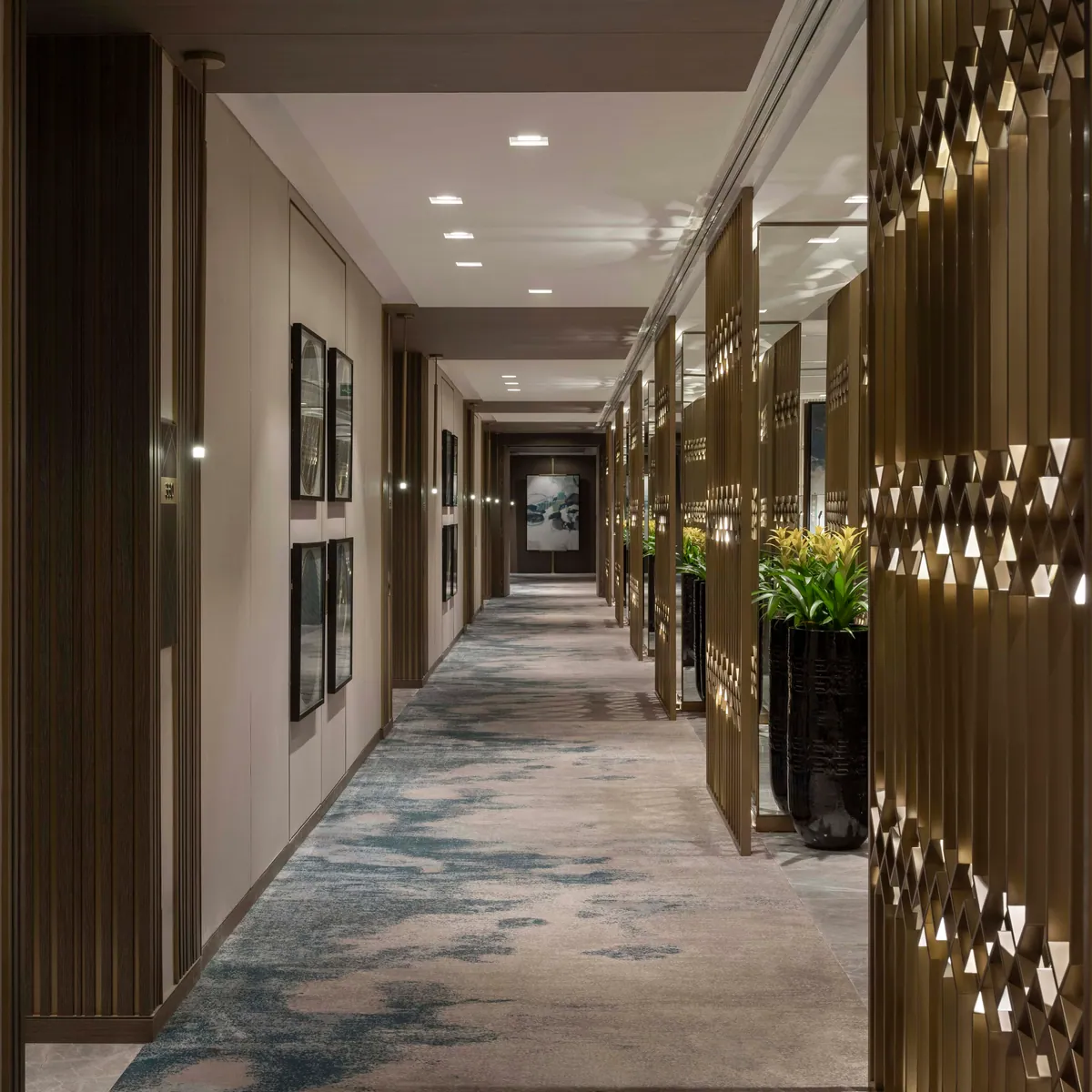
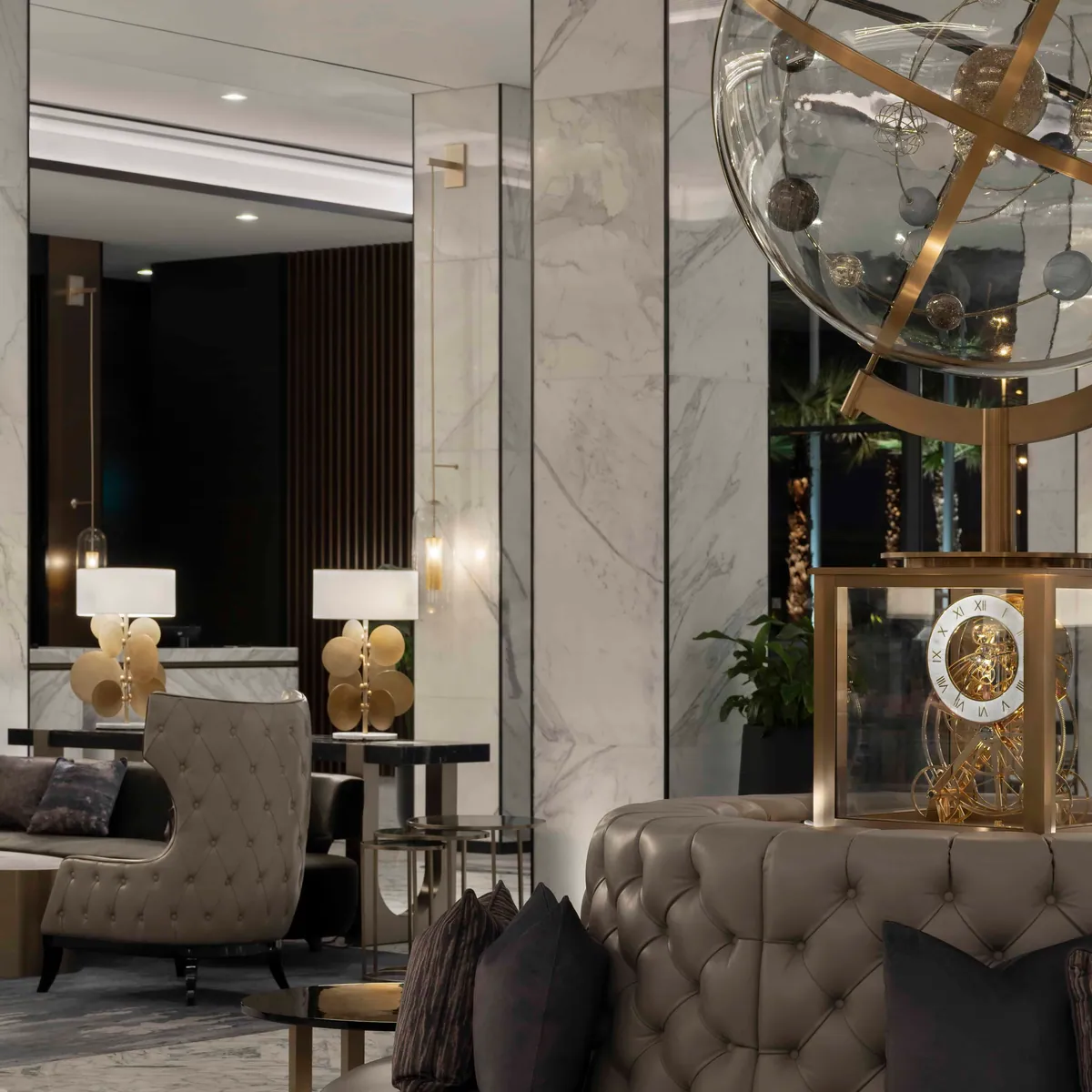
Glimpses through the floors add depth and intrigue from the lobby and across the guest room floors. The sculptural staircase and the decorative screens in the atrium link the spaces and connect the public areas with the guest room corridors. The signature Waldorf Astoria clock grounds the lobby and becomes the ‘meet me under the clock’ meeting place.
Astronomy was once a tool for navigation as well as religious purposes; even today, the pole star is the most accurate way to determine the direction of Mecca and to keep prayer times. The bespoke clock, designed and made by Smith of Derby in the UK, takes inspiration from the importance of the solar system in the Islamic world, where Arab nomads studied the sky and calculated the stars’ positions as they navigated the desert. Smith of Derby modelled the solar system as a globe, with the clock face in its base.
How do the spaces feel?
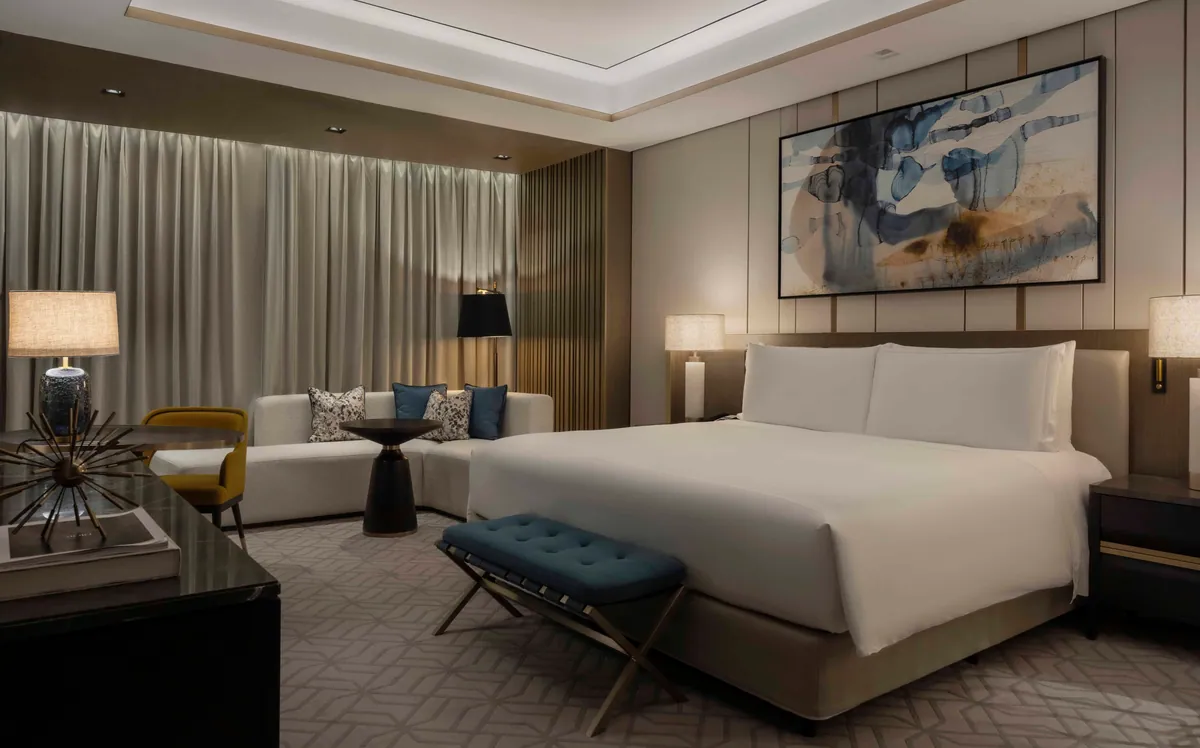
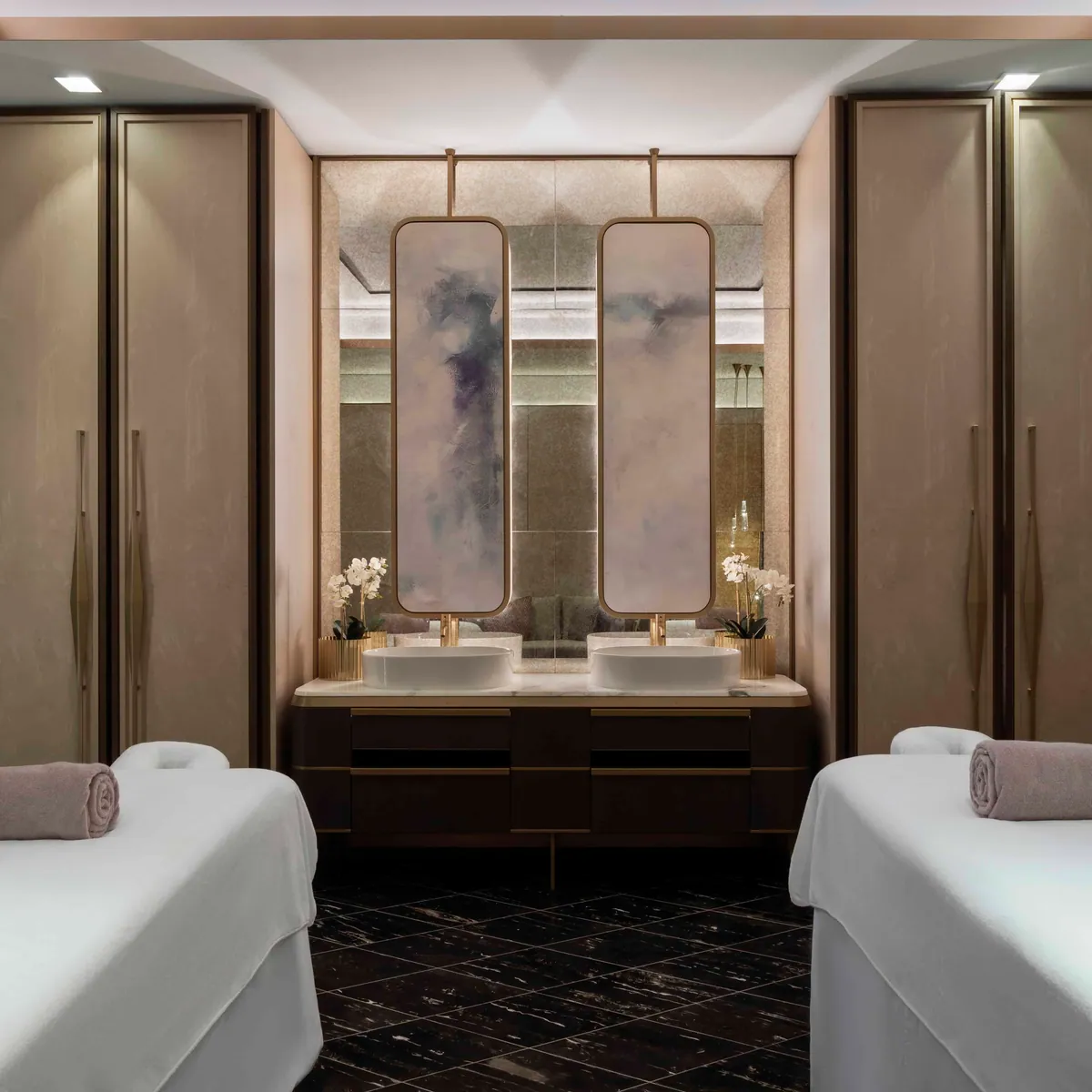
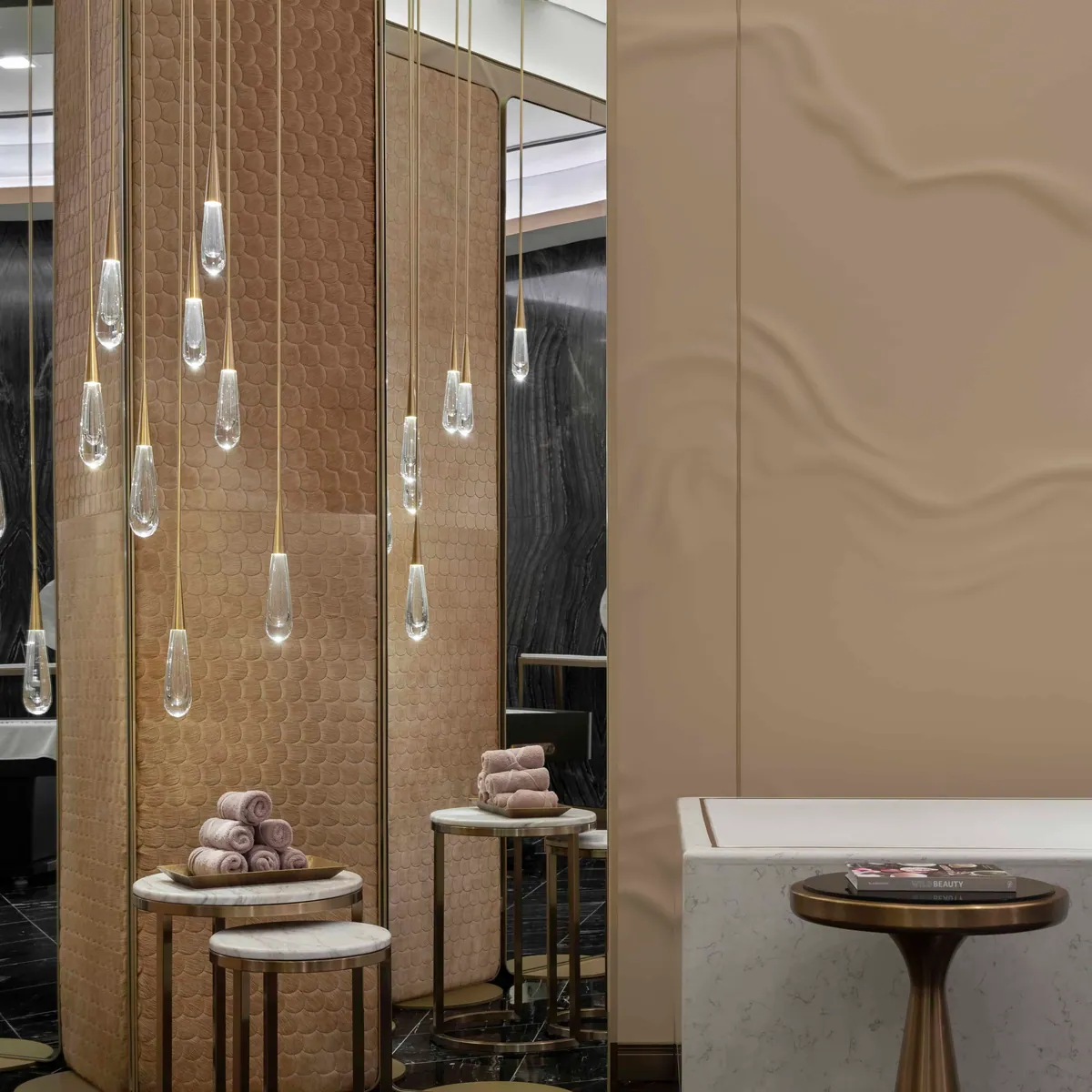
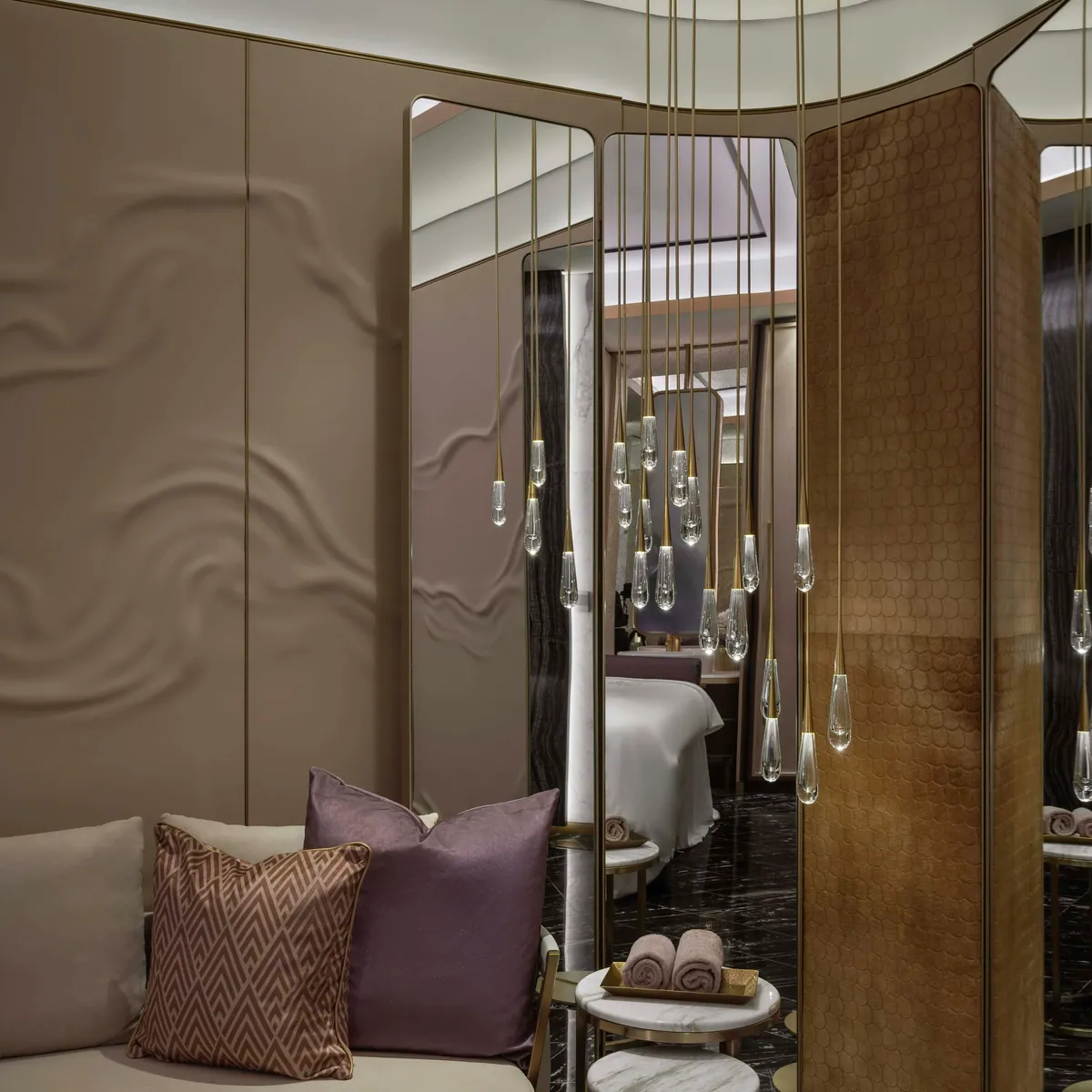
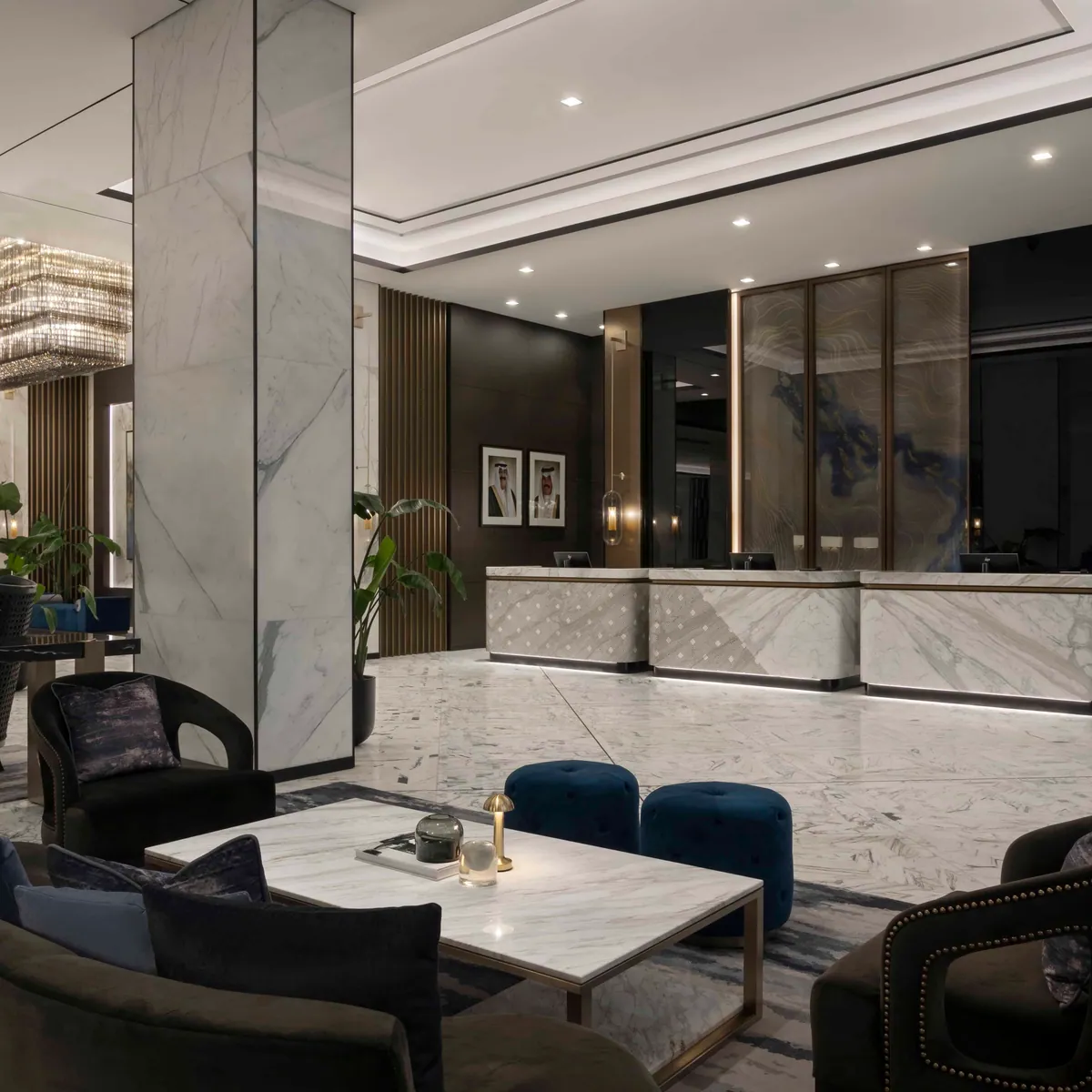
The overall colour scheme is monochromatic, with subtle tones and textures highlighted by rich accent colours. LW Design used contrasting materials to add glamour and luxe; grouped seating and nooks soften the hard finishes, and the artwork creates drama and a talking point while leading guests through the spaces. Connectivity throughout the hotel creates an element of discovery.
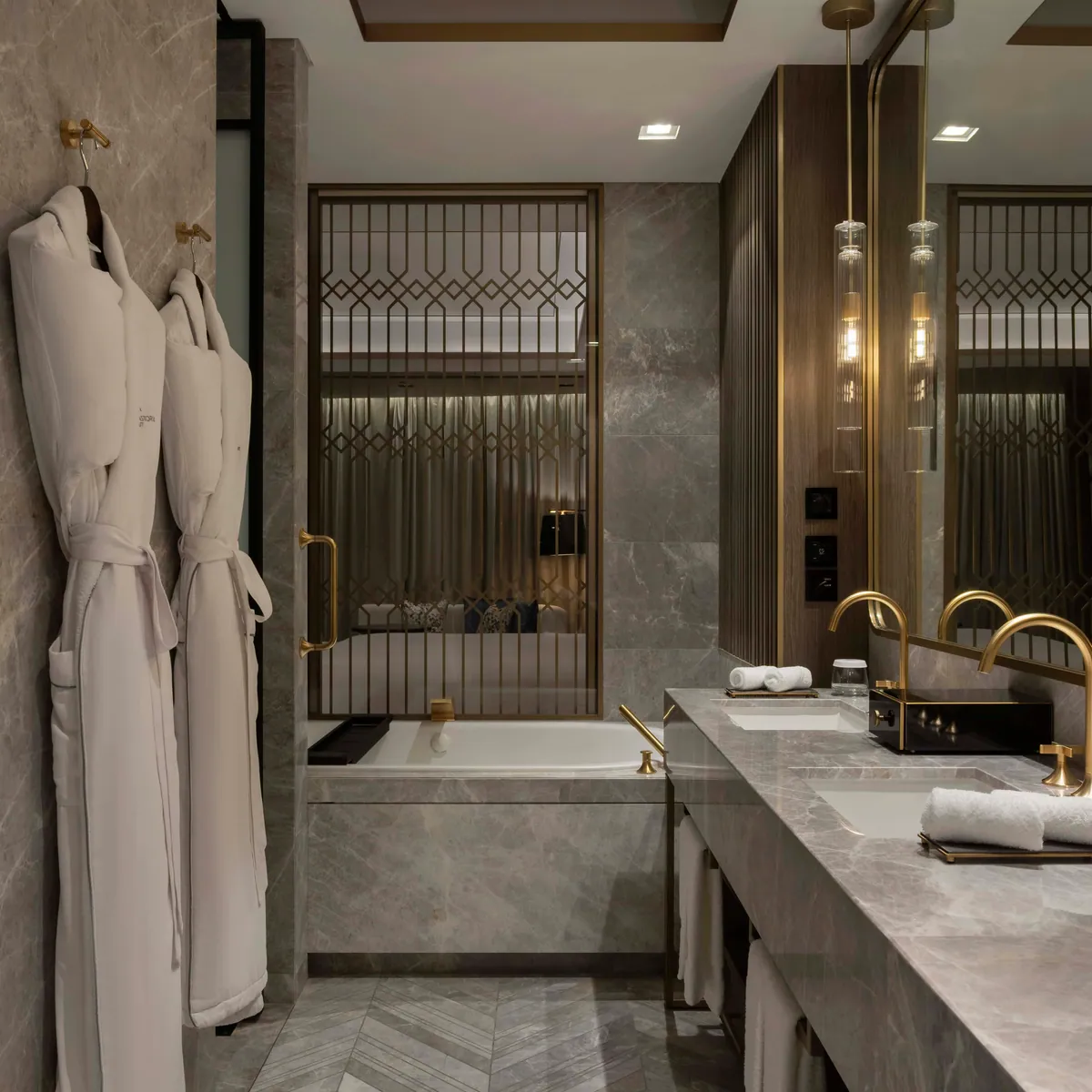
Guest rooms have full-height windows that create a New York loft-inspired experience. A screened window connects the bathroom and the bedroom, with a discreet blind for privacy.
Which materials were used?
Italian marble is accented with champagne gold metal and rich timber; wood and metal screens divide the areas and add depth and layering. Focal areas are highlighted with decorative inlaid marble floors, and parquet flooring is softened with loose rugs. A curated, eclectic mix of FF&E gives each space residential appeal, character and identity.
The hotel has 200 rooms, the Al Yasmine Grand Ballroom and the Al Narjis multi-function room, across a built-up area of 50,498 m². LW Design Group delivered the project across architecture, engineering and interior design.
Gallery
Inside Waldorf Astoria
Press & news
Waldorf Astoria in the News
- CEO Middle East · Legacy Edition CEO Middle East Cover Story: A Legacy of Vision July 2023
- LW newsroom Waldorf Astoria Kuwait in CID Magazine Oct 2021
Related work
More from the Portfolio
Bab Al Shams
Dubai, United Arab Emirates
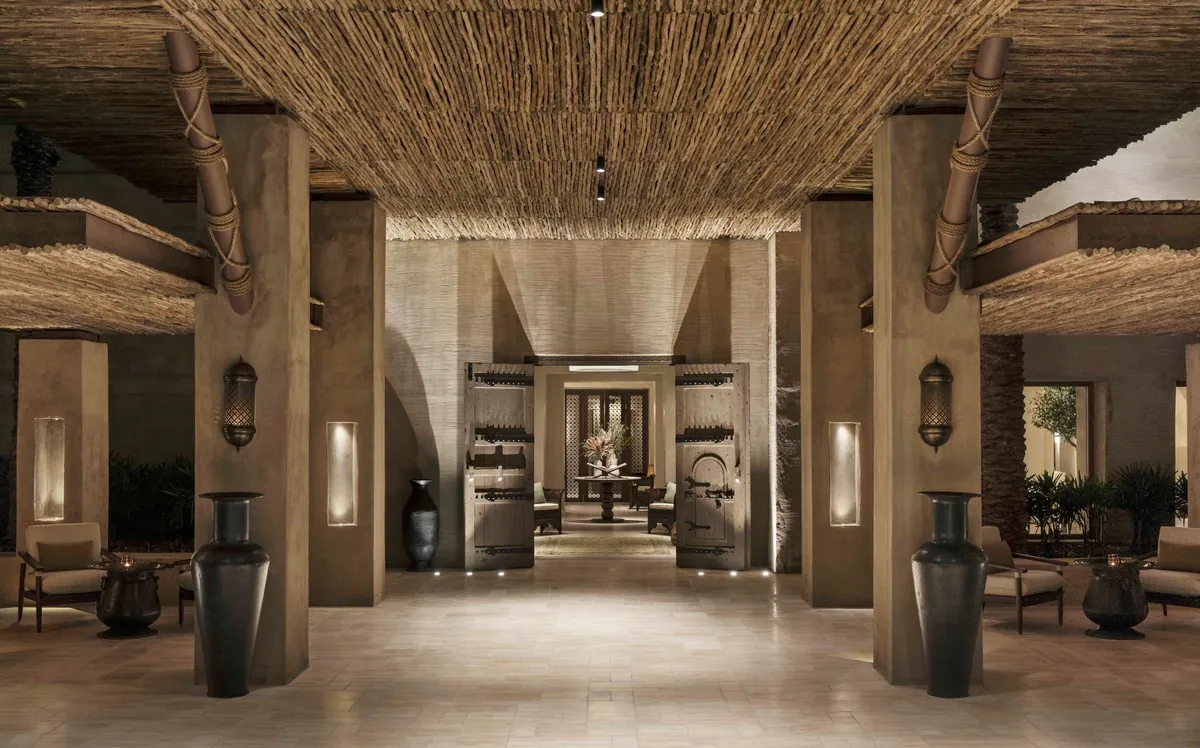
Bab Al Shams is the reinvention of a landmark desert resort outside Dubai as the first property of Kerzner’s Rare Finds collection, designed by LW Design Group. Built around the narrative of “The Lost Princess”, the 115-key resort was closed and renovated in nine months, re-using its original furniture, artwork and doors throughout.
SIRO
Dubai, United Arab Emirates
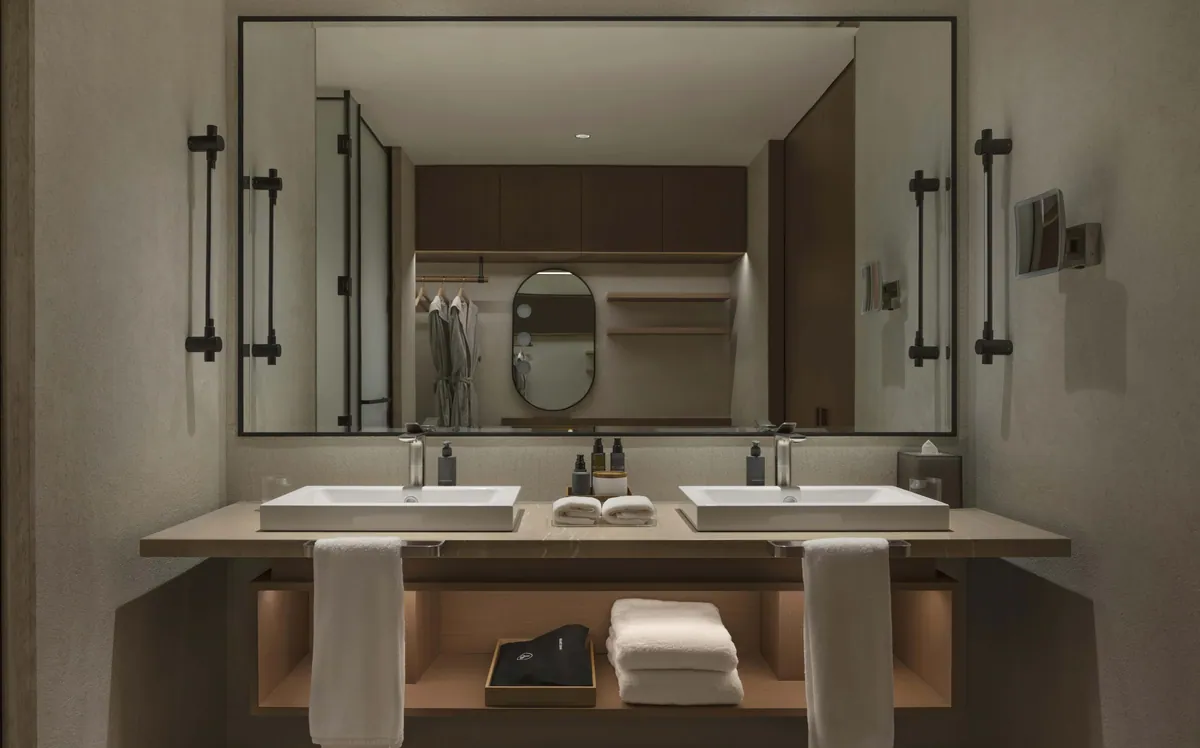
SIRO One Za’abeel, Dubai, is the first fitness and recovery hotel: a 132-key pilot for Kerzner International’s new brand, conceptualised and designed by LW Design Group. Two converted floors hold 920 m² of fitness space and a 1,750 m² recovery floor, joined by a sculptural spiral staircase.
Conrad Bahrain
Manama, Bahrain
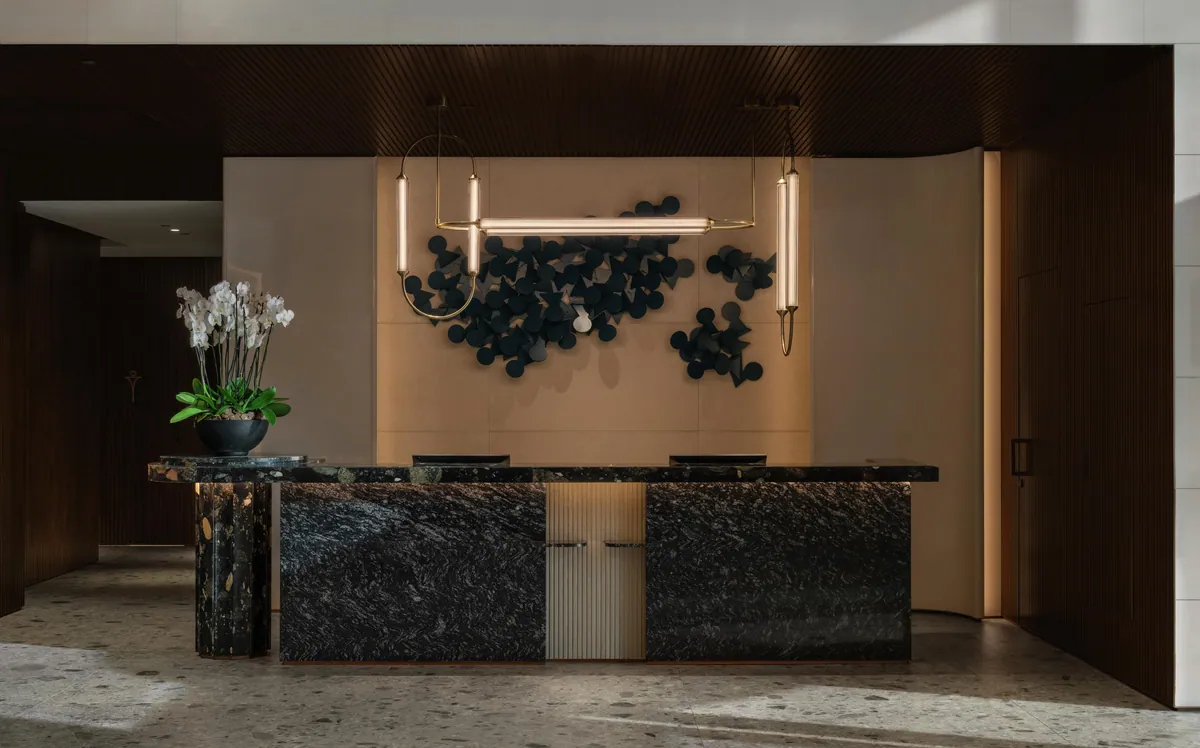
Conrad Bahrain is a 98-suite luxury hotel in the FEB Tower on Manama’s seafront, designed by LW Design Group and opened in May 2024. A residential tower recast as a hotel mid-construction, its 18,400 m² rise over 24 floors to SushiSamba on the roof, and it was named Interior Design of the Year at the 2025 Commercial Interior Design MENA Awards.